Mobile App Products
1. Android Applications
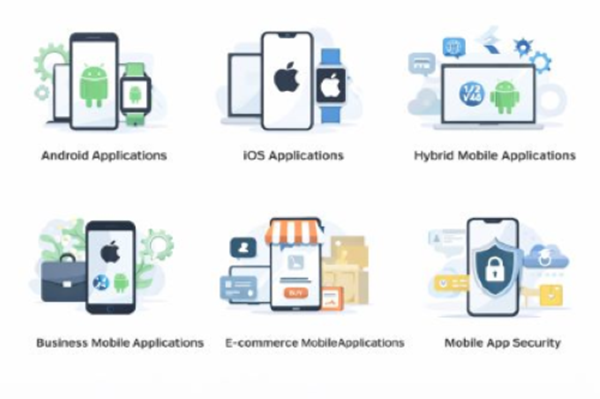
Android Applications are mobile software programs developed specifically for devices running on the Android operating system. These applications are widely used across smartphones, tablets, smart TVs, and wearable devices.
Why Do You Need an Android App?
Android apps help businesses reach a massive global audience. They provide flexibility, scalability, and cost-effective development while allowing deep integration with device features such as GPS, camera, and push notifications.
Key Features of Android Apps
1. Open Platform: Supports customization and third-party integrations.
2. Google Play Store: Easy app distribution and updates.
3. Device Integration: Camera, GPS, sensors, and notifications.
2. iOS Applications
iOS Applications are designed for Apple devices such as iPhones and iPads. These apps are known for high performance, strong security, and premium user experience.
Why Do You Need an iOS App?
iOS apps help businesses target high-value users and ensure consistent performance across Apple devices. They also offer enhanced security and smooth user interfaces.
Key Features of iOS Apps
1. High Security: Built-in data protection and privacy features.
2. Smooth Performance: Optimized hardware and software.
3. App Store Quality: Strict quality and design standards.
3. Hybrid Mobile Applications
Hybrid Mobile Applications are built using a single codebase that works across both Android and iOS platforms. They combine the power of web technologies with native features.
Why Do You Need a Hybrid App?
Hybrid apps reduce development cost and time while maintaining good performance and consistent user experience across platforms.
Key Features of Hybrid Apps
1. Single Codebase: Faster development and easier maintenance.
2. Cross-Platform: Works on Android and iOS.
3. Cost Effective: Lower development and support costs.
4. Business Mobile Applications
Business Mobile Applications are designed to streamline internal processes, improve productivity, and support business operations.
Why Do You Need a Business App?
Business apps help organizations manage employees, customers, inventory, and reports efficiently with real-time access.
5. E-commerce Mobile Applications
E-commerce Mobile Applications allow businesses to sell products and services online with secure payment gateways and real-time order tracking.
Why Do You Need an E-commerce App?
E-commerce apps increase sales, improve customer engagement, and provide a personalized shopping experience.
6. Mobile App Security
Mobile App Security focuses on protecting user data, preventing cyber threats, and ensuring secure communication within mobile applications.
Why Is Mobile App Security Important?
Strong security builds user trust, prevents data breaches, and ensures compliance with industry standards.