Security Products
1. Network Security Systems
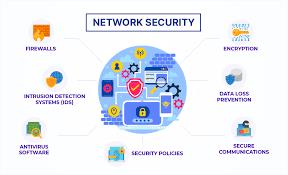
Network security refers to the technologies, policies, people, and procedures that defend any communication infrastructure from cyberattacks, unauthorized access, and data loss, while upholding the principles of the CIA triad.In addition to the network itself, they also secure traffic and network-accessible assets at both the network edge and inside the perimeter.
Why Do You Need a Network Security System?
Digital acceleration paved the way for business efficiencies, cost reductions, and productivity improvements. Yet, it has also led to an expanded attack surface across the growing network edge. From local area networks (LAN) and wide area networks (WAN) to the Internet of Things (IoT) and cloud computing each new deployment results in another potential vulnerability, underscoring the need for robust cloud-based network security frameworks.
How Does a Network Security Systems Work?
A Network Security Systems has core components:
1. Reduced cyber risk: Strong, robust security measures help ensure your data always stays protected.
2. Enhanced data privacy: Eliminating threat vectors ensures sensitive information is shielded from unauthorized access while traversing the network, thereby safeguarding customer data, and maintaining compliance..
3. Improved business continuity: Protected networks are more resilient against potential disruptions and experience minimal downtime, leading to optimal productivity.
4. Better network performance:Security prevents bad actors from disabling the network, ensuring critical resources are always readily available.
Digital acceleration paved the way for business efficiencies, cost reductions, and productivity improvements.
Examples of Popular Network Security Systems Platforms
Here are some widely used Network Security Systems platforms:
- Conduct Regular Security Audits
- Regular security audits help organizations identify and detect vulnerabilities before they escalate, keeping network infrastructure secure.
- Implement Network Segmentation
- Dividing the network into small, multiple segments enables granular control over data flow and access. This reduces the attack surface and contains potential damage within isolated segments.
- Enforce Multi-Factor Authentication (MFA)
- Implementing MFA, which adds an extra verification step before granting access, combined with strong passwords, can reduce unauthorized access and strengthen network security.
- Use Virtual Private Networks (VPNs) for Secure Remote Access
- VPNs encrypt traffic between remote users and the network, establishing secure connections and safeguarding sensitive data over the internet.
- Establish a Zero-Trust Security Framework
- The zero-trust security framework works on the principle of “never trust, always verify,” assuming no device is secure. It verifies each device in the network before granting access, thus minimizing the chances of breaches.
- A least privilege access policy limits users’ access and provides only the minimum level of access required to perform a job. This minimizes the attack surface, safeguarding sensitive data.
- Implement strong encryption protocols and strict authentication policies, and continuously monitor the wireless network.
For beginners, the best Network Security Systems platforms are Secure Wireless Networks, Enforce Least Privilege Access, and Establish a Zero-Trust Security Framework due to their ease of use and extensive support.
2. Web Application Firewalls
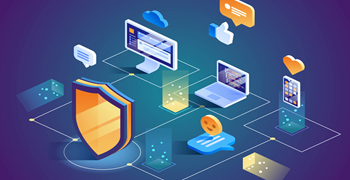
Web Application Firewall protects the web application by filtering, monitoring, and blocking any malicious HTTP/S traffic that might penetrate the web application. In simple words, a Web Application Firewall acts as a shield between a web application and the Internet. This shield protects the web application from different types of attacks.
Why Do You Need a Web Application Firewalls ?
Low-cost for cloud-based WAF solution. Prevent attacks which include SQL injections, cross-site scripting (XSS) attacks, etc. It prevents cookie poisoning. Cookie poisoning is the manipulation of cookies in order to keep track of users' information. Prevents data from being compromised.
Types of Web Application Firewall:
1. Network-based WAFs : They provide latency reduction due to local installation. Network-based WAFs are the most expensive and also require the storage and maintenance of physical equipment.
2. Host-based WAFs: It is a cheaper solution compared to hardware-based WAFs, which are used for small web applications. The disadvantage of a host-based WAF is the consumption of local server resources because of which the performance may degrade.
3. Cloud-based WAFs: The cloud-based solution is the perfect choice when a person doesn't want to restrict themselves with performance capabilities.
Importance of Web Application Firewall:
There are several hackers out there who are ready to execute their malicious attacks. The most common attacks such as XSS, SQL Injection, etc.
Policy in Web Application Firewall:
- The set of rules through which a WAF operates is called a policy.
- The purpose of these policies is to protect against the vulnerabilities in the application by filtering out malicious traffic.
- The value of a WAF comes in part depending upon the speed and efficiency with which the policy modification is implemented.
3. Endpoint Security Solutions
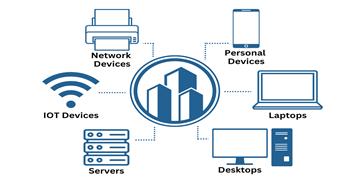
Endpoint security is a cybersecurity approach to protecting end-user devices—such as laptops, servers, and mobile devices—from cyberthreats and malicious activity. As remote work and cloud adoption expand the digital attack surface, endpoints have become the primary entry point for threat actors.
Why Do You Need a Endpoint Security Solutions?
directly manages organizational risk and maintains operational resilience:
1. Stops Multi-Front Incidents: Over 70% of incidents tracked by Unit 42 span three or more fronts (endpoints, cloud, identity).
2. Defeats Evolving Threats: Modern protection relies on AI to combat polymorphic, fileless, and zero-day attacks that bypass static, signature-only solutions.
3. Ensures Compliance: Strong endpoint controls, especially regarding data access and logging, are foundational for meeting key data protection regulations, including GDPR and HIPAA .
4. Guarantees Continuity: By minimizing incident scope, impact, and downtime, high-efficacy endpoint security protects against massive financial losses and reputational damage.
How Does a Endpoint Security Solutions?
Endpoint security extends protection beyond the network perimeter to every device that connects to the organization’s systems.
- Monitor endpoint behavior
- Analyze data for anomalies
- Automatically respond to suspicious activity, often before human intervention is needed.
Examples of Popular Endpoint Security Solutions Platforms
Here are some widely used Endpoint Security Solutions platforms:
- Next-generation antivirus (NGAV)
- NGAV uses machine learning and behavioral analytics to identify never-before-seen threats, rather than relying solely on signature-based detection.
- Host-based firewalls and intrusion prevention
- integrating data from multiple security layers — including network, email, cloud, and identity systems.
- Device and application control
- These technologies protect against insider threats and data exfiltration. Device control regulates the use of removable media and peripheral connections, while DLP monitors and restricts the movement of sensitive data.
- Centralized policy management
- In combination, these technologies create a defense-in-depth model that protects endpoints across all phases of an attack — from initial compromise to post-incident recovery.
3. Identity and access Management
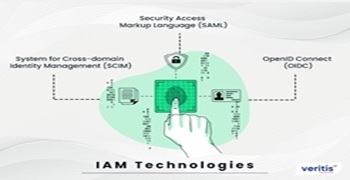
Identity and Access Management (IAM) is a framework of policies, processes, and technologies that enable organizations to manage digital identities and control user access to critical corporate information.
Why Do You Need a Identity and access Management?
Identity and Access Management (IAM) is important for modern organizations. IAM systems enhance security by controlling user access and managing digital identities. This prevents unauthorized access to sensitive data and applications.
How Does a Identity and access Management?
Identity and Access Management (IAM) systems manage authentication and authorization to control user access. In IAM, users represent digital identities, including team members, customers, employees, or participants. Digital identities can also represent non-human entities like software, IoT devices, or robotics.
Core Components of Identity and Access Management (IAM)
An IAM solution consists of various components and systems. The most commonly deployed include:
- Single Sign-On
- Enhanced user experience
- Reduced password fatigue
- Simplified password management
- Minimized security risks for customers, partners, and vendors
- Limited credential usage
- Improved identity protection
- Multi-Factor Authentication
- Something the user knows: a password
- Something the user has: a token or code sent to the user via email or SMS, to a hardware token generator, or to an authenticator application installed on the user’s smartphone
- Something specific to the user, such as biometric information
4. Data Encryption Tools
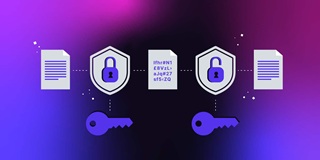
Encryption is the process of encoding readable text into secure code. It’s a fundamental technology for securing information against outside access. Historically, it has been used in spycraft and wartime for sensitive communications, but the more familiar applications today center on online data.
Why Do You Need a Data Enceyption Tools ?
Regardless of whether you are using symmetric or asymmetric encryption, the secret keys exchanged must use an algorithm to encrypt information.
How Does a Data Enceyption Tools work?
Let’s explore the common day-to-day use cases of encryption:
1. File Encryption: if you’re sending and receiving sensitive information through files such as Word documents, PDFs, or images, file encryption can be used to protect the information contained in those documents.
2. Disk Encryption: While it’s less common these days, information is sometimes stored and shared on physical devices such as hard drives or USB drives. Ensuring these physical devices have proper cybersecurity procedures implemented in their distribution will help keep the information on them out of the hands of hackers.
6.Vulnerability Assessment Tools
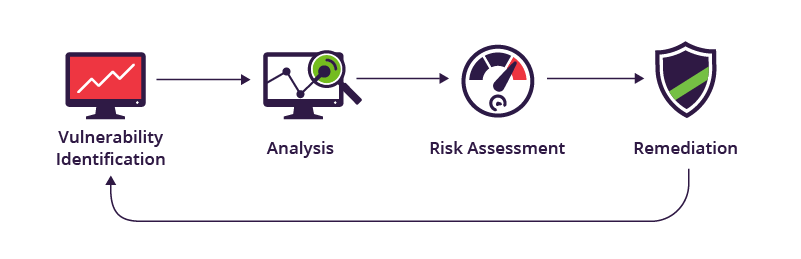
Vulnerability assessment tools are software programmes designed to find security weaknesses throughout IT systems. These tools form the core of vulnerability assessment in cybersecurity. They detect problems like outdated software, incorrect settings, and missing patches
Why Do You Need a Vulnerability Assessment Tools?
Network-Based Scanners: Check network devices to find open ports and service weaknesses.
Host-Based Scanners: Work on individual computers to find software problems and setup issues.
Application-Based Scanners: Look at software code to detect flaws like injection vulnerabilities.
How Does a Vulnerability Assessment Tools?
The operation of vulnerability assessment tools hinges on a methodical, multi-step process:
1.Environment Scanning :First, they scan the designated environment, be it a network segment or an application, using techniques like port probing or code inspection.
2.Database Cross-Referencing : Next, they cross-reference findings against databases like the Common Vulnerabilities and Exposures (CVE) list, which, according to official CVE metrics, logged over 40,077 entries in 2024..
3. Severity Evaluation::Severity is assessed using frameworks like the Common Vulnerability Scoring System (CVSS), assigning scores from 0 to 10. .
4. Exploit Simulation:Advanced tools may test vulnerabilities with simulated attacks to see how easily they could be exploited.
Vulnerability Assessment Tools
Here's a selected vulnerability assessment tools list, organised by capabilities and best uses:
- Fortinet FortiCNAPP (Cloud-Native Application Protection Platform)
- Continuous vulnerability scanning across hosts, containers, and application language libraries
- Continuous vulnerability scanning across hosts, containers, and application language libraries
- CI/CD pipeline integration for build-time vulnerability detection
- Container image registry monitoring with both auto-poll and registry notifications
- Kubernetes admission controller integration to block risky containers from reaching production
- Tenable Nessus
- Finds many types of vulnerabilities using thousands of plugins
- Works with operating systems, network devices, and applications
- Checks compliance with various regulations
- Qualys VMDR
- Cloud-based scanning architecture
- Continuous monitoring capabilities
- Built-in threat intelligence and prioritisation
7. Malware Protection Software
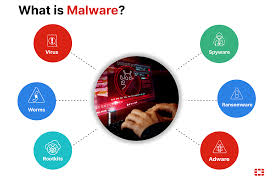
The motives behind the perpetrators of malware are many but they have one thing in common–malware is intended to reward the perpetrator at the victim’s expense. For example, in digital environments cyber criminals use harmful software, a.k.a. malware, to steal financial assets, and encrypt business critical data or lock up computing systems, for ransom.
Why Do You Need a Malware Protection Software?
- financial gain
- data theft
- system disruption
- espionage
- sabotage
How Does a Malware Protection Software?
It’s important to remove malware from a computer or isolate it from network environments as soon as possible to mitigate damage. For enterprise workstations, malware removal can be done remotely with business antivirus tools. If the malware evades the antivirus software more sophisticated forms of removal might be necessary
Types of Malware
- Viruses
- Worms
- Trojan viruses
- Spyware
- Ransomware
- Adware
- Rootkit
8. Compilance and Security Monitoring
Security compliance is the process of ensuring that an organization’s security practices, policies, and controls meet specific standards, regulations, or legal requirements. The goal is to mitigate risks, prevent security breaches, and demonstrate responsible data handling practices.
Why Do You Need a Compilance and Security Monitoring ?
Security compliance management is the process of implementing security controls and monitoring systems and policies while ensuring adherence to the latest regulatory standards. Organizations adopt several measures to ensure safety against security threats such as risk assessment, incident response, and system and network surveillance.
What are the Goals of Security Compliance Management?
Broadly it caters to the following:
1. Implementation of security controls: Security controls encompass a range of physical, technical and administrative measures to safeguard sensitive data.
2.Risk identification and incident handling : Risk management essentially involves identifying various risks, assessing their severity, and initiating measures to contain or eliminate the damage.
3.Avoiding ramifications of non-compliance : Non-compliance can land organizations into serious legal trouble that not only damage reputation but can have some severe financial consequences in the form of fines and penalties.
4.Maintaining public perception : Your brand carries an image that customers and stakeholders are all invested in. It takes years to build trust.